.webp?v=639277312741774433)


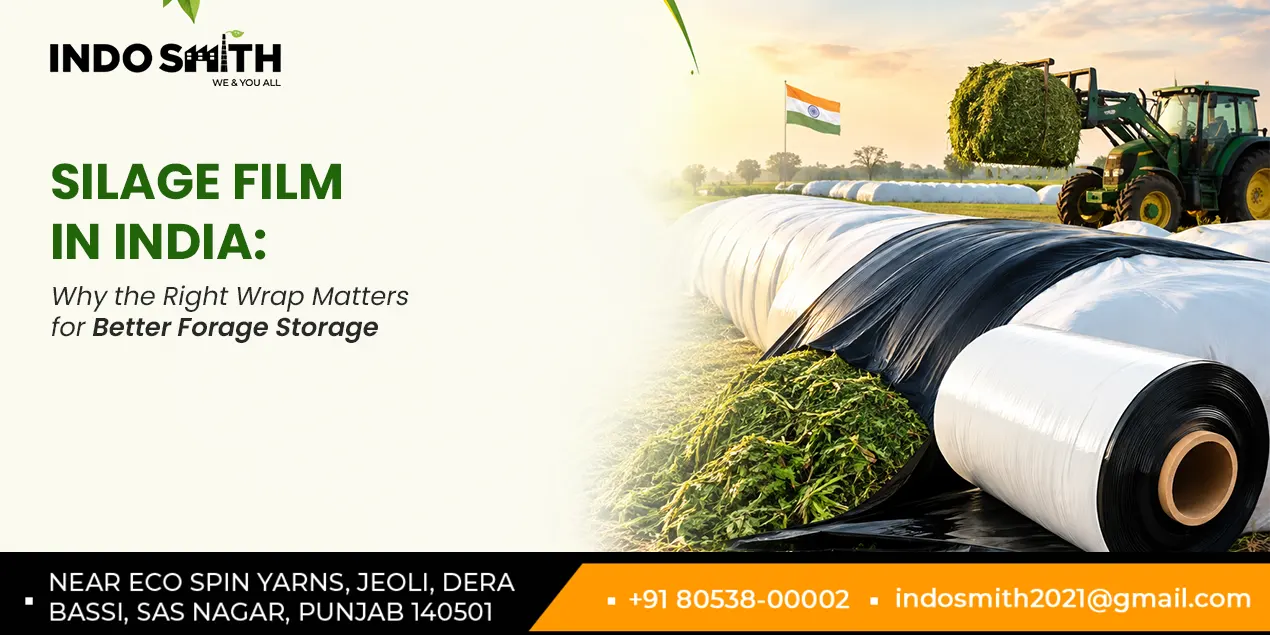
Silage Film in India: Why the Right Wrap Matters for Better Forage Storage
For a dairy farmer, growing good-quality fodder is only half the job. The other half is making sure that the fodder remains useful after it has been harvested.
That is where silage comes in.
Silage allows farmers to preserve green fodder and use it later, making it particularly useful when fresh forage is difficult to source. Maize silage, for example, is commonly used as an energy-rich feed for dairy cattle. But producing good silage is not simply a matter of harvesting the crop, baling it and leaving it aside. The way the bale is wrapped and stored can have a direct impact on how well the forage is preserved.
A good-quality silage film plays an important role here. It helps create the low-oxygen environment needed for fermentation while protecting the bale from moisture, sunlight and physical damage.
For Indian dairy farmers, where storage conditions can range from intense summer heat to heavy monsoon humidity, choosing the right wrapping material deserves more attention than it often gets.
Why Does Silage Need to Be Wrapped?
The basic idea behind silage preservation is fairly simple: keep oxygen out.
Once forage is harvested and properly prepared, it needs to undergo fermentation. Useful microorganisms convert naturally occurring sugars into acids, which lower the pH of the material and help preserve it.
The problem begins when oxygen gets back into the bale.
Too much air can encourage mould and other undesirable microbial activity. The result may be spoiled sections of the bale, unpleasant odour, loss of nutrients and, ultimately, wasted feed.
This is why wrapping is not just a final packaging step. It is part of the preservation process itself.
A well-wrapped bale should have a tight, reasonably uniform covering with minimal opportunities for air to enter. The film needs to stay intact while the bale is being moved, stored and handled over time.
What Makes a Good Silage Film?
Not all stretch films are designed for the same purpose, and this is particularly important when choosing a film for silage.
The first thing to consider is strength. A bale may be handled several times after wrapping. It could be moved by machinery, stacked or transported to another location. If the film tears easily during these activities, the protection it provides can quickly be compromised.
Stretchability is just as important. The film needs to stretch around the bale without losing its ability to hold together. Consistent stretching also helps the layers sit closely against each other, reducing the chances of air finding its way into the package.
Then there is adhesion. The individual layers need to hold together effectively so that the wrapped bale remains properly sealed.
Resistance to sunlight also matters in India. Bales may be stored outdoors for weeks or months, exposing the film to strong UV radiation and considerable temperature fluctuations. A film that deteriorates quickly under these conditions may leave the forage vulnerable before it is ready to be used.
For anyone evaluating silage film for dairy farmers in India, these practical factors are often more important than simply comparing prices or film thickness.
Why Maize Silage Requires Particular Attention
Maize is a popular silage crop because it can provide cattle with a useful source of energy and can be incorporated into feeding programmes relatively conveniently.
But good maize silage starts well before the bale is wrapped.
The crop needs to be harvested at an appropriate stage, with suitable moisture content. If the material contains too much moisture, fermentation may not proceed as desired. If it is too dry, achieving adequate compaction can become difficult.
Once the forage has been prepared and baled, wrapping becomes the next important consideration.
Farmers looking for the Best silage wrap film for maize storage India should therefore look beyond a single specification. The film should suit the wrapping equipment being used, provide sufficient stretch and strength, adhere properly between layers and remain capable of protecting the bale throughout the intended storage period.
A film that performs well during application but develops tears later is not really solving the problem.
India's Weather Makes Film Selection More Important
Packaging materials used outdoors have to deal with conditions that are often difficult to control.
In some parts of India, summer temperatures can become extremely high. In other regions, humidity and rainfall create an entirely different set of challenges. During the monsoon, poorly stored or damaged bales can be particularly vulnerable to moisture-related problems.
The film therefore needs to do more than simply cover the bale. It needs to continue performing under the conditions in which the silage is actually going to be stored.
Farmers should also remember that even a good film can be damaged by careless handling. Sharp stones, rough surfaces, machinery and animal activity can all create punctures. A small tear may not look significant initially, but it can allow oxygen into the bale over time.
That is why wrapped bales should ideally be inspected from time to time, particularly if they are going to remain in storage for an extended period.
Stretch Film Has a Much Wider Role
The usefulness of stretch film extends far beyond agriculture.
Walk into a warehouse or logistics facility and you will find stretch film being used in a completely different way. Pallets carrying cartons, manufactured products, components and other goods need to remain stable while being moved, stored and transported.
A loose load can create problems at several points in the supply chain. Products can shift during transportation, cartons may fall or become damaged, and handling becomes more difficult.
Stretch film helps hold the load together and can also provide an additional layer of protection against dust and handling-related damage.
This is why companies searching for Heavy duty stretch film for logistics companies India generally have requirements that are different from those of a farmer wrapping silage. A logistics operation may be more concerned with load stability, puncture resistance, holding force, stretch characteristics and the weight or shape of the products being wrapped.
The common thread is simple: the film has to perform its job consistently.
Is Thicker Film Always Better?
Not necessarily.
It is tempting to assume that a thicker film will automatically provide better protection. But film performance depends on several characteristics working together.
A film that is thicker but difficult to stretch or apply efficiently may not necessarily deliver better results than a well-engineered film with appropriate strength and stretch properties.
The same principle applies to silage. The right film is the one that matches the application, wrapping equipment, handling conditions and expected storage period.
For businesses and farmers alike, looking at the complete performance of the film is usually more useful than focusing on one specification in isolation.
Good Wrapping Also Depends on Good Handling
The film is only one part of the equation.
Bales need to be wrapped properly, handled carefully and stored in a location where the risk of physical damage is minimised. If a wrapped bale is dragged across a rough surface or repeatedly exposed to sharp objects, even a strong film can eventually fail.
The same applies to industrial stretch film. Correct application and appropriate storage of the film rolls can influence how well the material performs once it reaches the warehouse floor or loading area.
In other words, good packaging is a combination of the material, the equipment and the way it is used.
About Indo Smith
Indo Smith provides packaging solutions for businesses and applications where material performance matters. With different industries having different packaging challenges, the right solution needs to be considered in the context of how the film will actually be used.
Whether the requirement involves protecting agricultural produce, wrapping silage or securing loads for transportation and storage, choosing the appropriate film can help improve handling, reduce avoidable packaging failures and protect what matters inside the wrap.
For organisations evaluating film solutions, understanding the application first is a far better starting point than simply choosing a product based on a specification sheet.
The Right Wrap Can Prevent Avoidable Losses
Good silage represents time, effort, land, labour and money invested by the farmer. Losing part of that feed because the wrapping fails is an avoidable setback.
The same principle applies to logistics. When a pallet becomes unstable or products are damaged because packaging does not hold up during transportation, the cost can extend well beyond the packaging material itself.
That is why film selection deserves a practical, application-first approach.
For dairy farmers, the focus should be on creating and maintaining the right conditions for forage preservation. For logistics companies, the priority may be securing loads and keeping products protected throughout their journey. In both cases, the film needs to be strong enough for the job, suitable for the environment and reliable throughout its intended use.
If you are evaluating silage film, stretch film or heavy-duty packaging solutions for your business, speak to Indo Smith about your specific requirement. The right film should not simply wrap your product—it should help protect the investment behind it. Contact Indo Smith today to discuss your application and find a packaging solution built around the way you actually work.

