.webp?v=639277312741774433)


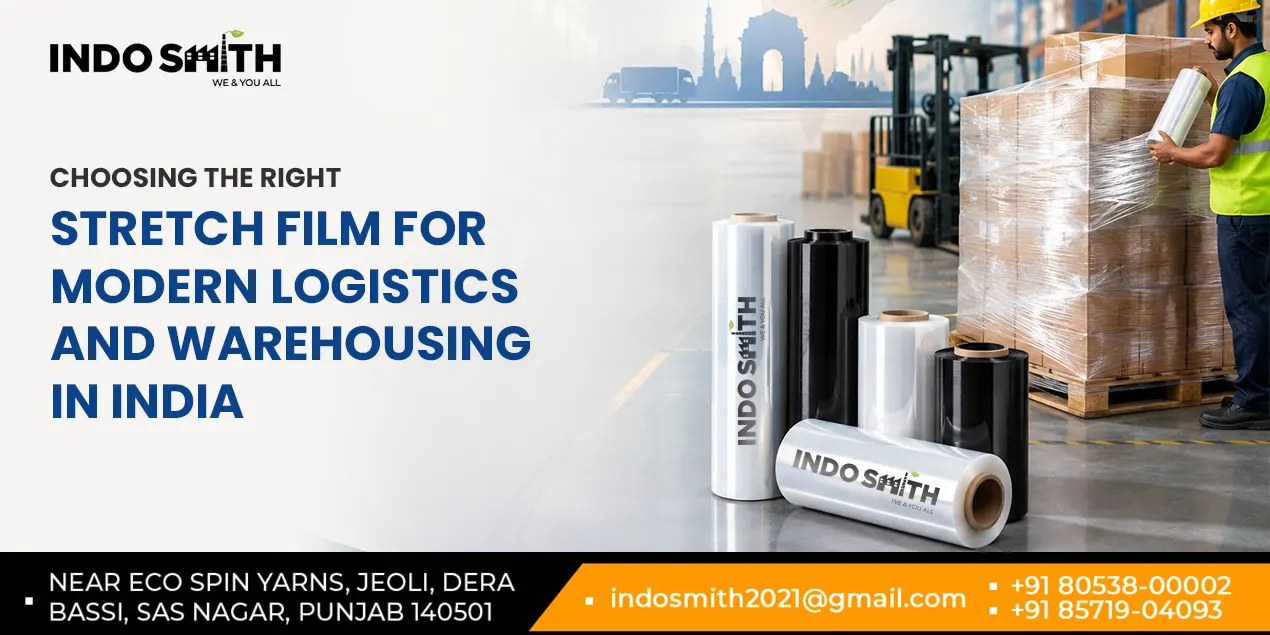
Choosing the Right Stretch Film for Modern Logistics and Warehousing in India
Packaging has changed considerably with the growth of organised warehousing, e-commerce, manufacturing and long-distance logistics in India. Products now move through several stages before reaching their final destination. They may leave a manufacturing unit, spend time in a distribution centre, pass through multiple loading points and finally arrive at a retailer or customer. At every stage, the packaging needs to remain secure without making handling unnecessarily difficult.
This is where stretch film has become an important part of modern packaging operations. It may look like a simple material, but the right film can make pallet handling easier, improve load stability and reduce unnecessary use of packaging material.
The challenge for businesses is not simply finding stretch film. It is finding a film that matches the way their products are handled, stored and transported.
Understanding the Role of Stretch Film in Modern Packaging
Stretch film is primarily used to hold products together during storage and movement. When applied around cartons, boxes, bundles or pallets, the film creates tension that helps keep the load consolidated. This makes it easier to move goods using forklifts, pallet trucks and other handling equipment.
The requirement, however, varies significantly from one business to another. A warehouse storing lightweight cartons may not need the same film as a company transporting heavy machinery components. Similarly, a business wrapping a few pallets manually every day has very different requirements from a distribution centre operating automated wrapping equipment.
Film selection should therefore begin with the application rather than simply the price or thickness printed on the roll.
When Heavy-Duty Applications Need More Than Ordinary Wrapping
Industrial and logistics operations often deal with loads that are heavy, irregular or difficult to stabilise. Sharp corners, uneven surfaces and considerable pallet weight can place additional stress on packaging film.
For such applications, Heavy duty stretch film for logistics companies India can provide the additional strength and puncture resistance needed for demanding loads. The objective is not necessarily to use the thickest film available. Instead, businesses should look for a suitable balance between strength, stretchability and load-holding performance.
This becomes particularly relevant when goods travel long distances or are handled repeatedly. A film that performs well during initial wrapping but loses tension or tears during handling can create unnecessary problems further along the supply chain.
Heavy-duty stretch film is therefore best viewed as part of a complete load-securing strategy rather than simply as a thicker version of conventional packaging film.
Why Transparency Matters in Warehouses
Warehouses are busy environments. Workers need to identify products, read labels, check quantities and move inventory quickly. Completely covering a pallet with an opaque packaging material can make these routine activities less convenient.
A Transparent stretch film roll for warehouse use In India can offer a practical alternative because the products and labels remain visible after wrapping. This can be particularly useful in storage environments where pallets may remain wrapped for days or weeks before dispatch.
Transparency also helps during stock verification. Warehouse personnel can often identify the contents of a wrapped load without removing the entire protective layer. For operations handling a large number of SKUs, this small advantage can contribute to smoother everyday inventory handling.
The right transparent film should still provide sufficient cling, stretch and tear resistance for the intended application. Clarity alone should never become the deciding factor.
Manual and Machine Wrapping Require Different Approaches
The growth of automated warehouses and high-volume distribution has changed the way many companies apply stretch film. Manual wrapping remains practical for smaller operations, occasional shipments and loads that vary considerably in size. However, high-volume facilities may benefit from machine application.
This is where Machine grade stretch film in India becomes relevant. Machine-grade films are designed for use with automated or semi-automated wrapping systems, where consistent tension and controlled application are important.
Machine wrapping can provide greater consistency because the equipment controls aspects such as film tension, wrapping speed and the number of revolutions. When the film is properly matched with the machine and load, businesses can achieve more predictable wrapping while reducing unnecessary material consumption.
However, simply installing a wrapping machine does not guarantee efficiency. The film must be compatible with the equipment, and settings need to correspond with the type, size and weight of the load being wrapped.
The Real Meaning of Cost-Effective Stretch Film
Packaging managers naturally pay attention to the price of stretch film. But the purchase price of a roll is only one part of the calculation.
A film that requires excessive wrapping, breaks frequently or performs inconsistently may increase consumption and labour requirements. Conversely, a film that provides reliable performance with controlled usage can deliver a lower overall packaging cost even if its price per roll is not the lowest available.
This is why businesses looking for Low -cost stretch film manufacturers in India should look beyond the basic quotation. Manufacturing consistency, material quality, available specifications and the ability to supply according to operational requirements can all influence the actual cost of packaging.
For businesses purchasing stretch film regularly, evaluating cost per wrapped pallet rather than simply cost per roll can provide a more meaningful picture.
Choosing Film According to the Load
There is no universal stretch film specification that works equally well for every business. The nature of the product, pallet dimensions, load weight, storage conditions, transportation distance and method of application all influence the choice.
A company shipping carton of consumer products may prioritise clarity and efficient wrapping. An industrial manufacturer handling components with sharp edges may need greater puncture resistance. A distribution centre operating automated equipment may place greater emphasis on consistent stretch performance and machine compatibility.
Even the way a pallet is stacked matters. A stable, evenly arranged load places different demands on stretch film compared with an irregular load containing gaps and protruding edges.
Before placing a large order, businesses can benefit from testing the film under their actual operating conditions. A sample wrapped around the real type of load can reveal much more than specifications on a product sheet.
Efficiency Should Extend Beyond the Film Itself
Stretch film is only one part of the packaging process. Its performance is influenced by how the load is stacked, how much tension is applied, the wrapping pattern and the equipment being used.
Training workers to wrap consistently can prevent excessive film consumption. In automated operations, reviewing machine settings periodically can help ensure that the equipment is not applying more material than necessary.
Storage conditions also deserve attention. Film should be stored appropriately so that its properties remain consistent until it is required for use. Small improvements across these areas can collectively make packaging operations more efficient.
The objective should be simple: secure the load properly while using the appropriate amount of material for the job.
Indo Smith: Stretch Film Solutions for Different Applications
Indo Smith manufactures industrial and agricultural film solutions, including manual-grade and machine-grade stretch films. Its stretch film range is designed for different wrapping requirements, allowing businesses to consider factors such as application method, load characteristics and required stretch performance when selecting a product. The company also works with customised film requirements, which can be useful for businesses with specific packaging needs rather than standard off-the-shelf applications.
For companies evaluating suppliers, the advantage lies in having a manufacturer that can discuss the application instead of treating every packaging requirement as identical. Indo Smith's focus on industrial film solutions makes it a relevant option for businesses looking to source stretch film for warehousing, manufacturing and logistics operations.
Make Stretch Film a Packaging Decision, Not Just a Purchase
The right stretch film can contribute to more organised handling, better load stability and more controlled packaging consumption. But achieving those benefits requires businesses to look beyond a simple price comparison.
Whether the requirement involves heavy industrial loads, transparent warehouse wrapping or automated packaging, the film should be selected according to the actual operating environment.
If you are reviewing your current packaging process, now is a good time to reassess the film you use, how much you consume and whether it is genuinely suited to your application. Speak with Indo Smith about your specific load, wrapping method and volume requirements, and explore a stretch film solution designed around the way your business actually works.
Choose the right film. Wrap smarter. Protect every load from the warehouse floor to its final destination. Get in touch with Indo Smith today to discuss your stretch film requirements and take the next step towards a more efficient packaging operation.

